
Western dry forest
Fiji crested iguana
Brachylophus vitiensis
Critically Endangered CITES I
John Gibbons described this species in 1981. It is paler than the banded iguanas, with a more obvious crest of spines, and it can shift toward black when agitated. It belongs to Fiji’s dry forest — a habitat that has been burned, browsed and fragmented for generations.
Most of the global population lives on Yadua Taba, a sanctuary island of about 70 hectares. Published estimates have put the world total around 13,000 animals, with the vast majority on that one island. That is a conservation success and a single-point failure at the same time.
Crested iguanas have received more recovery attention than the banded species: predator control, habitat protection, and assurance colonies. Other western islands still hold remnant groups, sometimes rediscovered only when an animal turns up on a resort lawn.
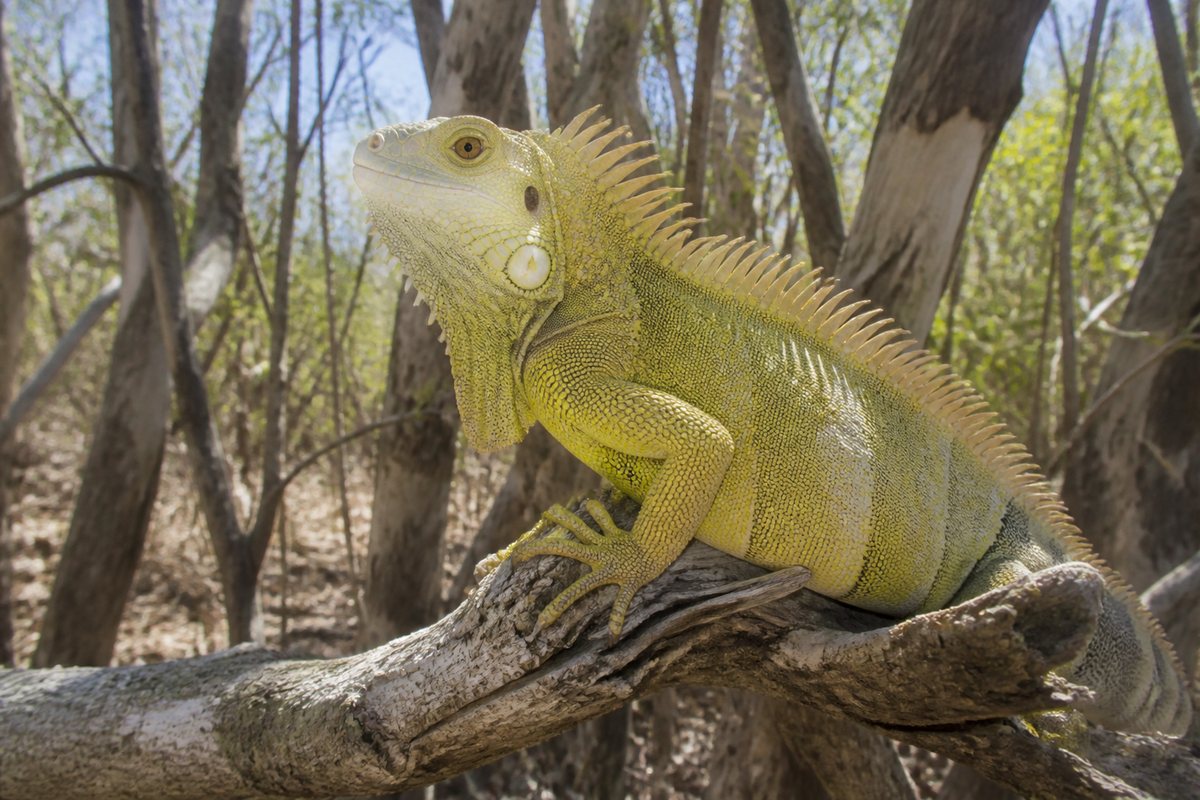
Northwestern Fiji dry forest. Yadua Taba is the stronghold.
The largest living Brachylophus. A long tail still makes up most of the length.
Tiny area of occupancy, invasive predators, and fire in dry forest. One island holds almost everyone.
Yadua Taba is managed as a crested iguana reserve. Visiting wild populations is not a casual tourist activity.