
Described 2017
Gau iguana
Brachylophus gau
Endangered CITES I
Gau is the fifth-largest island in Fiji and still holds interior forest. Iguanas were reported there for decades, but they were shuffled between fasciatus and bulabula on maps. In 2017 Robert Fisher, Jone Niukula, Dick Watling and Peter Harlow named them as their own species.
The diagnostic details are small and specific: a primarily green nasal scale, a different colour pattern, and a smaller maximum body size than the other living species (adult snout–vent length in the original series topped out well below the crested and Lau animals).
That is the pattern of Pacific iguanas: each island, given enough time, becomes its own story. Surveys of Fiji’s northern large islands are still incomplete. B. gau is unlikely to be the last surprise.
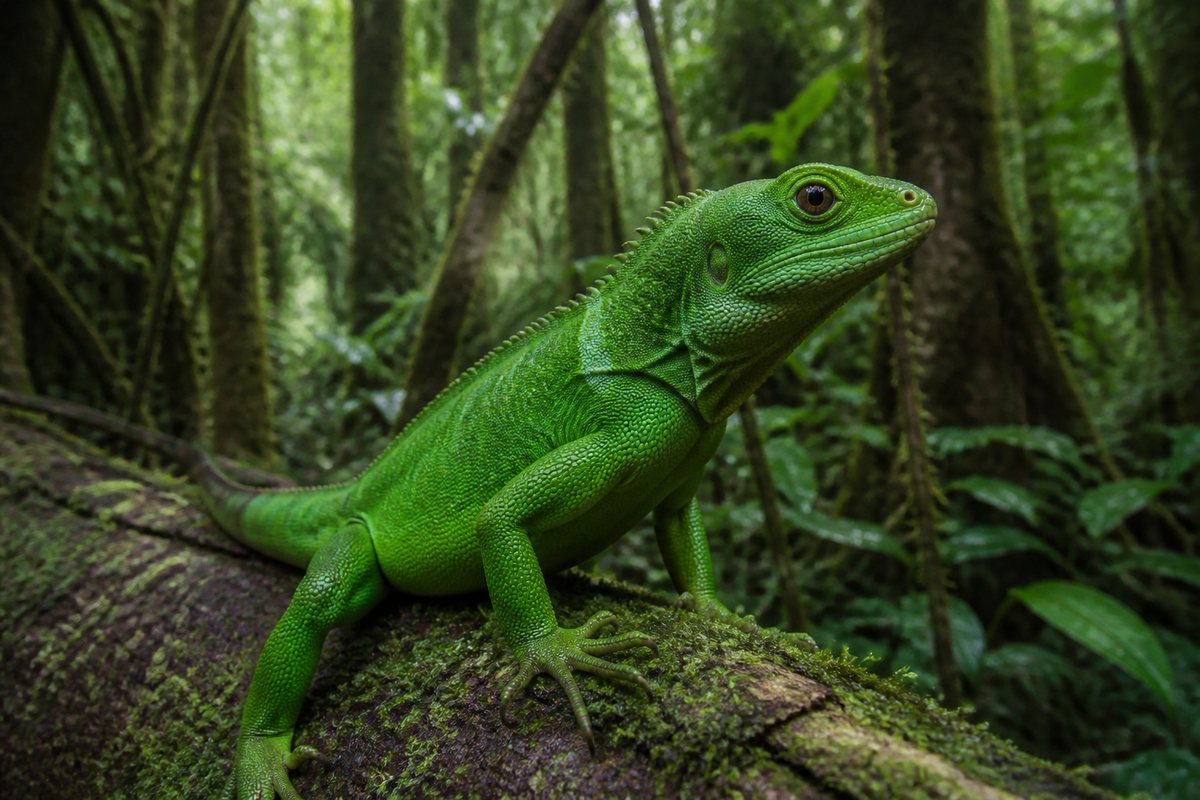
Gau Island only — inland forest, with some animals in degraded forest nearer the coast.
Smaller than fasciatus and vitiensis in the type series (maximum SVL 173 mm, n = 7).
The same island package: forest loss and introduced predators. A one-island endemic has no backup range.
Fisher et al., 2017, Zootaxa 4273: 407–422. USGS also summarised the find.